Jul 24, 2026
By Stu Horvath

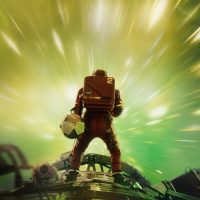
Image: Seth Hahne
Growing up, I had two churches.
The first was the building itself, a rambling affair of brown brick and dark wood built in 1896. This was a place of mystery, a potential setting for any number of kid adventure novels, full of twisting hallways, crumbling plaster and musty smells. From the disused storerooms to the sealed off bell tower to the ancient bowling alley in the basement, First Presbyterian Church of Arlington stoked my overactive imagination.
The second church was something more ephemeral – the community of the largely Scottish American congregation. This was my mother’s church (Dad was an ambivalent Catholic) and, by extension, the church of my maternal grandparents and many of their friends, where I was to gain a rudimentary understanding of Protestant religion over the course of eight years of Sunday School. This was a warm place of church fairs, choir concerts and fish and chips dinners.
In recent years, much of the building has been renovated and stripped it of its mystery. People have moved on or died. The church changed, in that way things do when an era comes to an end. It wasn’t mine anymore.
Still, it remains an important place to me. I met my oldest and best friend at Sunday School. My mother is still the church secretary. These days, I even rent parts of the building for events.
The last time I went to a service, though, was for my father’s funeral in 2010. A lot of things from First Presbyterian have stuck with me, but belief was never one of them.
***
I’ve always been uncomfortable with belief. This is not a choice on my part. This is merely how my brain works.
In belief I see a treacherous slope of sharp rocks and unforgiving brambles. When someone says that they believe in something, I infer that they are disregarding the facts in front of them. Belief favors ideas that are comfortable and make sense. In a world that is often senseless, I can see why this is so appealing, but I always wind up coming back to a line from Philip K. Dick’s novel VALIS:
Reality is that which, when you stop believing in it, doesn’t go away.
This pattern repeats in controversial topics now and through history – GMOs, the relationship between autism and vaccines, that the Earth is round, that the sun is the center of the solar system. In all these cases, there are two camps: those who accept the empirical evidence, and those who are wrong.
I am not saying that I don’t subscribe to an ethical or moral system. I am not a nihilist (they believe in nothing – a subtle distinction, but a distinction nonetheless). But whatever I think about the world is dictated by the world. The introduction of new data means that I may have to revise my principles. This is the foundation of reason.
I can’t think of a situation in which I would embrace a principle and attempt to make the world reconcile itself to it. I do not mean that in a rhetorical sense – as I said, my brain just does not work that way. I often wish that this was not the case. There is undeniable comfort in faith, something Philip K. Dick and his protagonists struggled with. I simply seem to be incapable of faith, afflicted with a kind of spiritual impotence.
Most people find cilantro to have a pleasantly aromatic citrus flavor, but some poor souls only taste soap. My relationship with supernatural matters is like that. I don’t taste anything pleasant or citrusy. I only taste soap.
I carry around in my head another quote from Douglas Adams’ The Hitchhiker’s Guide to the Galaxy. It concerns the metaphysical implications of the babel fish, a creature whose biological function is to translate languages, essentially a living proof of intelligent design:
Now it is such a bizarrely improbable coincidence that anything so mindbogglingly useful could have evolved purely by chance that some thinkers have chosen to see it as the final and clinching proof of the non-existence of God.
The argument goes something like this: “I refuse to prove that I exist,” says God, “for proof denies faith, and without faith I am nothing.”
“But,” says Man, “the Babel fish is a dead giveaway, isn’t it? It could not have evolved by chance. It proves you exist, and so therefore, by your own arguments, you don’t. QED.”
“Oh dear,” says God, “I hadn’t thought of that,” and promptly vanishes in a puff of logic.
“Oh, that was easy,” says Man, and for an encore goes on to prove that black is white and gets himself killed on the next zebra crossing.
As Adams points out, faith is a realm beyond proof. There are no weights and measures for it. For him, as an avowed atheist, that lack of evidence was a revelation of absence – we can’t measure the supernatural because the supernatural doesn’t exist. This strikes me as a kind of anti-faith.
This also tastes like soap.
In the Iliad, Homer famously references the wine-dark sea. Granted, the poet was blind, but the Aegean Sea is blue like every other, not red. There are many theories attempting to explain this literary mystery, from mis-translations to an unusual algae bloom. Most intriguing in this context is the possibility that humans of the time perceived the color spectrum differently than we do now.
Perhaps the faithful have a previously undiscovered biological faculty for faith. It isn’t a new concept – organic manifestations of the spiritual in the form of chakras and the third eye appear in many Eastern religions and Descartes was embarrassingly preoccupied with the notion that the pineal gland in the brain was “the principle seat of the soul.”
On the other hand, maybe there is a vast unseen supernatural realm all around us. The faithful can’t prove it and the faithless can’t disprove it. I am neither and this leaves me in a strange predicament. Faith, for obvious reasons, is a warm and attractive thing, but I can’t just choose to have faith. If I could, I know what my choice would be.
I have always felt like I’ve been missing something fundamental about the human experience. My lack of faith sometimes feels like a failure. Maybe the faithful are delusional and I am lucky to not have that baggage. I don’t know. Better to ask a blind man about the color blue.
***
Then, of course, there is fiction, which only really works when we suspend our disbelief. I love fiction in all its forms, but none so much as videogames. It is within the context of videogames that I believe wholeheartedly.
Games, by design, are objective based, and there’s not a lot of room to doubt those objectives. If you don’t think Mario should be chasing after Princess Peach, there isn’t anything else for you to do. Without alternatives, the player has to assume all those cute Koopas and Goombas had it coming. You have to believe Mario’s cause is just and righteous or else your time is better spent with a book, or running around the park.

Super Mario Brothers
As games have grown in complexity over the years, multiple objectives became possible. Some games, like Mass Effect, make a game out of belief by allowing the player to define his character’s morality over the entire length of the game. In this way, we get the voyeuristic thrill of living another life. We can be bad, we can be good, and we can experience the consequences of those decisions in a small way that doesn’t affect our real lives.

Mass Effect
Other games subvert the expectations laid down by objectives that have been repeated ad nauseum. Far Cry 2 did this brilliantly. In typical videogame fashion, you go to a war torn country in Africa to kill the crazy person in charge, in this case an arms dealer named the Jackal. The only way to achieve this goal is by working with the warring political factions that are tearing the country apart. Just as with Mario, you have to assume that your protagonist’s cause is a just one.
The mechanics of Far Cry 2 never change as you play. You have guns. You run around the countryside shooting them at anything that moves. Eventually, though, you can’t help but wonder what you’re doing. The game gives you scant details on the people who sent you. You see civilians so rarely that they barely exist. There are only soldiers and, like you, most of them are mercenaries from outside the country. Over time, the litany of whys becomes a growing horrific realization that you are just as bad as the man you were sent to kill, if not worse. And because this is a game with limited capabilities, the only thing you can do about this existential horror is to continue running around the countryside shooting – or stop playing.

Far Cry 2
At the climax of Far Cry 2, you (and your character) believe something completely different than you do at the start. Gone is the mercenary charged with political murder and in his place is a man changed by the horrors of senseless military violence. Your final mission is to help the Jackal, your former target, ensure that the last civilian refugees flee the country, at the cost of your own lives. To get to the end of the game, you have to become a monster, something no one in their right mind ever wants to be. Yet, to finish the game, you have to put that terrible past aside. You have to believe in something better.
***
This is merely a simulation of something greater, something more profound, something I am cut off from.
I don’t live in a war-torn failed nation. In fact, I live free of most hardship, surrounded by friends and colleagues who embrace different viewpoints and support one another without a second thought. My life, when I look back, is a string of moments like my early days at First Presbyterian, in which groups of people have come together at their very best, in fellowship and a spirit of grace.
Those moments don’t ever seem to last long, but when they happen, they shine so brilliantly.
Perhaps that’s something to believe in after all.
Stu Horvath is the founder and editor-in-chief of Unwinnable, the editor of the Geek Empire collection on Medium, and a writer for Wired, Paste, and other outlets.
Feature illustration courtesy of Seth T. Hahne. Check out Seth’s graphic novel and comic review site, Good Ok Bad.