The Age of Fantasy: Competing Visions, Colliding Worlds
I now understand why the fantasy world imagined by Stan Lee offered a more compelling mythological lens than the world imagined by Tolkien did.

I now understand why the fantasy world imagined by Stan Lee offered a more compelling mythological lens than the world imagined by Tolkien did.
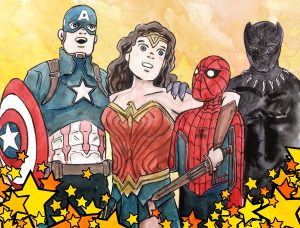
Our collective superhero fascination reveals a lot about how we define ourselves, Jesus, and our relationship to him.

Who are you? Who am I? These are the mysteries tackled in this issue of Christ and Pop Culture Magazine.

I don’t think a heavy-handed scene in which the women of the MCU are haphazardly thrown together is reason enough on its own to cheer, but I am encouraged by the possibility that Marvel recognizes a deficiency.

Infinity War begins with most of the Marvel heroes either having rejected a spirit of sacrifice or having never really acquired it.

In some ways, we all face a battlefield of minute, infinitesimally important choices every day, for good and evil.

Comic books have the ability to be informative portholes for everything ranging from pop culture, science, and history, to governmental, economic, and social structures.
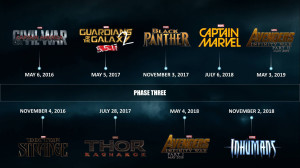
What Marvel has tapped into is the power of extended narrative meaning, of situating a life story within a universe governed by order.