
Jul 24, 2026
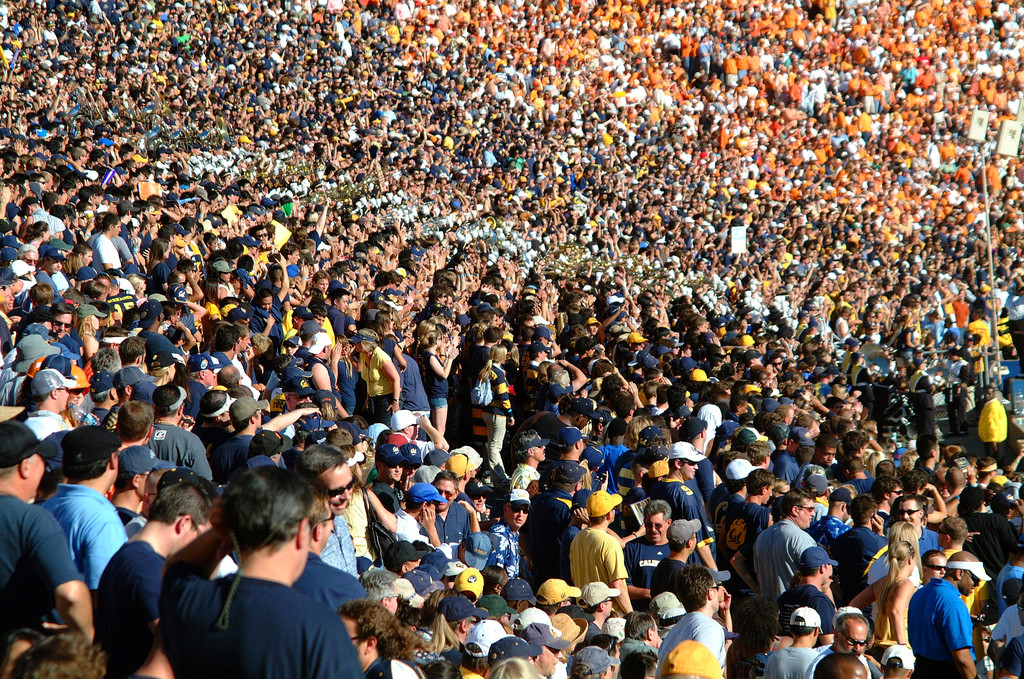
The day was January 23, 2010. I sat in section 13, row D, seat 20. It was the tenth game of season. We won.
I don’t remember these details for any universally important reason. By all accounts, the game (which featured the Virginia Tech men’s basketball team defeating Boston College at home) didn’t really matter; the Hokies’ 2009–2010 season was mediocre at best, and the tenth game of that season didn’t exactly challenge this standard. Regardless, I have the ticket stub laminated and saved in the pages of a scrapbook, partly because it was one of the first dates my now-husband took me on, and partly because it was the first major Division I college sporting event I ever attended.
Largely a product of New England, I grew up a fanatic of professional sports—more specifically, New England’s professional sports teams—but I never really developed a taste for college athletics. I knew they existed, and I half-heartedly tuned into college basketball once a year (the month of March), but the games didn’t leave a lasting impression on me. I assumed college sports to be a level above high school athletics but beneath a minor league. After all, competition featured amateur student athletes who may or may not eventually make it as bona fide professionals. It wasn’t until my husband, who will proudly tell anyone he’s a Virginia Tech Hokie, took me to that largely anticlimactic game against Boston College on January 23 that I really got it: These student athletes are not scholars who happen to play some ball in their spare time; competitive Division I teams do not merely take to courts or fields—they fill stadiums; and fans do not casually root on their classmates and friends—fanatical spectators band together as a cohesive unit and cheer as fiercely as any professional team’s fan base. I was hooked.
An Industry of Amateurs
Part of the reason I assumed college sports were unworthy of the time and energy I expend on fandom is because I’ve been to minor league games before. I love a Pawtucket Sox game as much as the next person, but minor league sports tend to lack two things I find integral to latch onto a team: continuity and an avid fan base. Players who stick around a minor league team for any great length of time are usually lackluster (though Cy Young winner R. A. Dickey certainly embodies proof that there are exceptions to that rule), and fans usually pay attention primarily to scout out young prospects.
I imagined college sports to be of a similar mold. The best high school basketball prospects weren’t even required to attend college until the 2006 NBA draft. Even now, they technically don’t have to attend—eligibility requirements simply stipulate that players must be at least 19 years old and one year removed from high school. This leaves truly elite players the opportunity to while away their one year until NBA eligibility by earning money in European or Asian leagues. High school baseball players are frequently drafted out of high school, though most attend college anyway and those who don’t serve time in the minor leagues. High school football players aren’t eligible for the NFL until they’re three years removed from high school, which is just as well, because they couldn’t realistically compete at the professional level of play until then anyway. All of this contributed to my perception that perhaps with the exception of football, college sports was likely disjointed and lacking fully realized talent. I couldn’t have been more wrong.
Despite the fact that a large portion of America is tuned into college athletics, for all those reasons, I had no grasp for the monumental nature of the business until I experienced it firsthand. My rationale was faulty, although I didn’t know it. Unlike minor league teams, college athletics do not simply exist to supplement the major leagues. The level of play is highly competitive, and the games are incredibly compelling. They do not lack a following and, despite the fairly regular roster turnover, still manage to maintain continuity and tradition. Indeed, college sports is a culture all its own.
And, perhaps most notably, all of this combines to create the perfect storm of a multi-billion dollar industry—one built almost entirely on the backs of amateur athletes.
A Disparity in Wealth
The NCAA earned 912 million dollars in the 2012–2013 fiscal year (a gross revenue amount that is growing each year). This same organization famously enforces rules prohibiting student athletes from receiving compensation for their contribution to college athletics. Student athletes may not receive impermissible benefits, which is an umbrella term that includes essentially any preferential treatment one might receive on the basis of status as a student athlete. This means that student athletes may not receive monetary gifts or cost-free goods or services; it means they may not sell or trade their autographs or memorabilia; and it means they may not receive any assistance from boosters, to name just a few things considered violations. Sanctions are implemented against teams whose players violate this standard—sanctions which often include retroactively forfeiting games or even seasons and declaring implicated athletes ineligible. Perhaps one of the most widely known scandals regarding impermissible benefits occurred at the University of Michigan when well-known booster Ed Martin was discovered to have paid players to launder money from an illegal gambling operation.
However, not every violation is as notable or as unethical as the Ed Martin scandal was. More frequently, violations involve athletes attempting to earn money off of autographs or jerseys. Violations like these frequently make headlines—headlines that usually paint the picture of NCAA organizations scandalized by lawless student athletes. Though expressly against NCAA standards, I fail to see a huge ethical dilemma. The real scandal is something that’s debated as frequently as impermissible benefits infractions make headlines: The disparity in wealth between the NCAA and the student athletes who make the industry work.
For permission to broadcast the NCAA Division I Basketball tournament alone, CBS is paying the NCAA 800 million dollars. The most competitive Division I schools benefit financially from successful athletics programs both directly and indirectly. Student athletes might technically be amateurs, but collectively they comprise a multi-billion dollar industry. Their reward? About $15,000 a year toward a college education.
A Focus on Scholarship
While many rally behind the notion that student athletes deserve the chance for more equitable compensation, there are just as many who insist on maintaining the current status. The argument is that student athletes are students first. Not only are the best athletes afforded the opportunity to earn a free college education, but they are also given the opportunity to showcase and hone their abilities for a chance at a professional career. And, after all, isn’t that one of higher education’s primary goals—to groom professionals?
Beyond the principle of the matter, there are also the logistics to consider. For example, how do you decide whom to pay? Theoretically, the best athletes would receive the most compensation for their skills. More accurately, however, this would play out as the best athletes within the top-grossing sports receiving the most compensation, which is likely to leave a bitter taste in the mouth of the perhaps more talented but less popular star center for the university’s soccer team. Further—what implications would this hold for Title IX, which requires proportionally equal funding for men’s and women’s athletics? Women’s athletics programs have made unparalleled progress since Title IX’s inception in 1972, but they still do not draw nearly the same viewership as men’s sports. Compensating athletes equitably based on revenue pulled in would leave female athletes without as much funding and opportunity as male athletes.
Logistically, there is a laundry list of reasons awarding top-earning athletes salaries is problematic. The fact remains, though, that per the attitude that supports current NCAA regulations, we are to treat student athletes primarily as students and secondarily as athletes—an expectation that is so far removed from reality that to actually implement it would drastically change the landscape of college sports.
Currently, most of America is huddled around a bracket predicting which college basketball team will win the national title. Shortly after a winner is declared, analysts will start discussing top football prospects. ESPN employs a sizeable portion of its staff primarily to cover sports at the college level. Many student athletes don’t even finish their degrees before becoming eligible and entering the professional realm. As a culture, we so thoroughly treat college athletes not only primarily as athletes, but almost exclusively as athletes, that to assert their primary focus and payoff should be the classes they barely have time for is not only unfair, it’s ridiculous. A genuine focus on scholarship would entail a major facelift for college athletics, and the people it would most affect are the spectators who fanatically rally behind their teams and the industry giants who turn a profit from the clamor.
College Athletes as Image Bearers
As enamored as I have become with the unique culture of college sports, I would (partly) be okay if the current landscape changed to embody a true scholarship focused attitude. It would be scaled back and quaint and probably more akin to my experience at a small Division I school, but it would afford student athletes the opportunity to be more holistically viewed as human beings—neither marked as scholars nor hyped as athletes, but as human beings who uniquely and imperfectly embody the qualities of both.
In addition to the gross disparity in wealth between the NCAA and college athletes, treating amateurs as professionals has a distinct effect in the way in which we perceive college athletes. Popular culture creates iconic versions of human beings. Snap shots of headlines and press conferences and brief encounters with fans combine together to form a mosaic of a person, paraded before the public to be consumed, often cast as either hero or villain. (Tim Tebow was a hero; Johnny Manziel was a villain. Both were image bearers of God born into humanity, which equips one as thoroughly to be a villain as it does to be a hero.) This happens in professional sports anyway, and that will likely never change on a global scale. I’m not sure that offering a buffer between high school and the professional realm will make navigating this any easier, but it might provide athletes more of an opportunity to learn and mature before needing to do so.
As a fan, the canyon between recognizing athletes as humans and treating them as such seems wide; I admit I don’t always make a valiant attempt to bridge it. Part of loving the Red Sox seems like despising the Yankees—part of defending Tom Brady’s legacy seems like belittling Peyton Manning’s. In all of this athletes serve as icons, their humanity relevant inasmuch as it serves my predisposed perception. My expectations of athletes, who are fellow human beings, are frequently too high, the grace I extend almost always too low. It’s easy to allow athletes’ identities to become the sum of their contribution to a sport or a team, because that’s the way they affect my life. It’s difficult to accept that I am not just a fan, but also a consumer. I am not just an observer of a broken system; I am a participant. The weight of that sometimes feels insurmountable and the charge to remedy the brokenness seems too important to be charged to me.
I could boycott the product being peddled to me, but that would feel like throwing the baby out with the bathwater. Even in its brokenness, I believe there is a strongly redemptive value to sports culture, especially college sports culture. Even while I observe an industry corrupted by greed—an industry that stands tall on the backs of amateur athletes—I believe in its goodness too. Woven into an admittedly broken system is the value of community; the thrill of triumph, the crush of defeat, and the existence of hope in both; and, ironically, exhibits of humanity, even in something as globally trivial as a game. So, for me, the solution is not as simple as turning my back on the culture that has become my own. If there is a solution, it must be enacted from within.
Conclusion
I am honestly not sure what is to become of the landscape of college athletics. Even as I type this, the debate rages on, both in the court of public opinion and in the court of law. Jeffrey Kessler—an attorney who has had a number of successful cases—has filed a lawsuit against the NCAA accusing the organization of price-fixing by setting the amount of scholarship assistance student athletes are eligible to receive. If he wins, higher education institutions are free to begin offering higher compensation packages to their student athletes. This would inevitably change the face of Division I college sports. Most schools would not be able to stay competitive and would likely drop down to Division II status. If Kessler loses (and he very well might), things are likely to stay the same. Regardless, though, the spirit and industry of college athletics is here to stay. It is too profitable a business to believe otherwise.
This does not mean that sports fans should be complacent with the status quo. Sometimes change looks like demolition—lighting a match and watching something infested burn to the ground; other times it happens from within, one painful step at a time. Perhaps changing the current atmosphere of college sports is as subtle as providing home cooked meals for the walk-on athlete with no scholarship and no free time for a job that pays—or offering child care for the dad who lives on the road half of the time and is at practice the other half. All of this starts with the hard work of examining a system dismissed as too flawed to care about by some and too enthralling to look for its warts by others.
Maybe one day we’ll start paying college athletes and rejoice for the dad who can provide for his family—even though it will then highlight the issue of equal funding/pay available for female athletes. Enacting one solution often means unearthing another problem. But by continually and proactively acknowledging the humanity of athletes, sports fans can affect change toward a healthier system and a healthier consumption.
Valerie Dunham graduated from Liberty University in 2011 with a B.A in English. Though she’s originally from Cape Cod, Massachusetts, she currently lives in Blacksburg, Virginia, with her husband, Matt, and son, Declan. In her free time, Val enjoys writing, watching any and every Boston sporting event, and volunteering at Cambria Baptist Church.
Image: Ian Ransley