
Jul 24, 2026
The Solange Knowles-Ray Rice Conundrum

On May 1, 2014 Ray Rice pleaded not guilty to charges of aggravated assault, which were brought against him after a hotel surveillance camera caught Rice dragging his then girlfriend from an elevator, seemingly unconscious. The Baltimore Ravens running back, who married his girlfriend the day after he was indicted on March 27, 2014, is described by his lawyers as being “…just a high-character individual. He’s a good guy.”
The majority of the nation reacted to his alleged violence a bit differently, the sentiments of which were aptly summarized by Buffalo Bills linebacker, Brandon Spikes, in the following tweet. “Someone should choke him out. See how he likes it.”
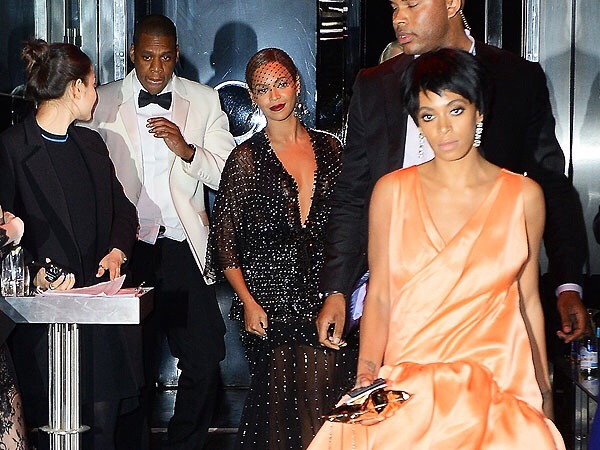
Less than a week later, at a Met Gala after-party, Solange Knowles made headline news after footage from an elevator surveillance camera was leaked—the contents of which show Knowles violently assaulting well known rapper Jay-Z (who also happens to be Knowles’ brother-in-law).
The two scenarios are eerily similar on many levels: both assaults were carried out in an elevator, where I’m sure each pair assumed themselves to be alone and in private. Both Rice and Knowles were well acquainted with their victims, which affirms the notion that each incident of assault may have been spurred on by festering anger. But among all of these similarities, there are two glaring differences surrounding the circumstances, and it seems only logical that these differences go hand-in-hand.
The first difference: Solange Knowles is a woman who assaulted a man, whereas Ray Rice is a man who assaulted a woman.
The second difference: Many of the general public are still outraged by Rice’s flagrant violence, while most reacting to Knowles’ attack seem to be baffled at best and entertained at worst.
It would be erroneous to ignore the fact that Jay-Z’s limp body was not hauled from an elevator by Solange Knowles—by all public accounts, he seems fine—but since when do we determine the severity of one’s sin by his or her ability to execute ill intentions? Very generally speaking, men tend to be physically stronger than women, and thus a man’s ability to do a woman physical harm is typically greater. But why does that make the violence that would propel a woman to attempt harm on a man less grave? God artfully crafted gender differences for many reasons; to make the fruit of a violent heart laughable is not one of them.
Does this idea—the idea that allows culture to be transfixed by a woman’s attack on a man—indicate something much deeper about our society? Though Biblical instruction demonstrates the fallibility in assigning a hierarchy to sin, humans—Christians and non-Christians alike—tend to do so anyway. Is that hierarchy informed by the heart from which sin blooms or the reach of a hell-bent hand? Incidents like these suggest the latter.

Editor Picks




Recent Columns


Recent Podcasts

Jan 31, 2024
The Scandal of Reading 37 | Tiffany Kriner on Louise Erdrich’s LaRose

Jan 24, 2024
The Scandal of Reading 36 | Winn Collier on Wendell Berry’s Jayber Crow

Jan 10, 2024
The Scandal of Reading 35 | Lit Pulpit – The Moviegoer by Walker Percy

Dec 13, 2023
The Scandal of Reading 34 | Daniel Nayeri on Calvin and Hobbes by Bill Watterson

Dec 6, 2023
2 Comments
I love this article! I have to admit that initially my thought process was that it is ridiculous to compare the two. I then wondered what Jay-Z had done to generate this type of response from Knowles. It was then that I realized what a powerful message this article sends. While I do not think any type of violence is okay, I found myself guilty of finding one offense absolutely sickening yet the other humorous. Very well crafted! I applaud the writers ability to take me, the reader through this process and send the point home! “God artfully crafted gender differences for many reasons; to make the fruit of a violent heart laughable is not one of them” is such an powerful sentence! I really enjoyed this article. Thanks.
I can’t help but think that the potential for harm should inform how we view the actions. Would Knowles have done what she did if it were likely to leave Jay-Z unconscious or kill him? Maybe, maybe not, but it seems plausible that she might not. (Some) women may feel free to exercise less physical restraint when angry at a man because they know the potential for harm isn’t very high. Men don’t have that luxury.
Comments are now closed for this article.