
Jul 24, 2026
Survival and Life in ‘Wayward Pines’

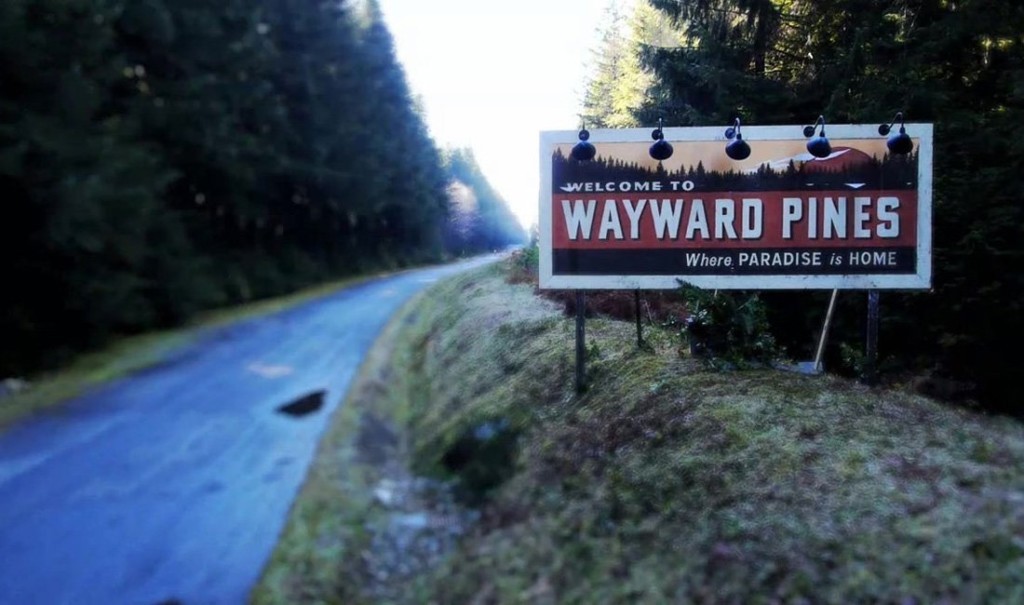
Spoiler Alert: This article contains significant spoilers for Wayward Pines.
When Fox first announced it would air the ten-episode limited-run series Wayward Pines, much of the initial attention focused on the fact that M. Night Shyamalan was directing the premier, as well as the significant number of familiar faces in the cast (such as Matt Dillon, Terrence Howard, Carla Gugino, Juliette Lewis, and Shannyn Sossamon). Shyamalan’s attachment, however, was a later addition. The series as a whole was the brainchild of TV writer Chad Hodge, who collaborated with author Blake Crouch to adapt Crouch’s Wayward Pines trilogy of novels.
Philosophers and theologians have been debating for centuries about just what, exactly, separates humanity from the other beasts that dwell alongside us.The show was first billed as a Twin Peaks-like mystery with possible supernatural overtones, though at its midpoint, the big revelations shifted it into solidly post-apocalyptic science fiction territory. It follows Secret Service agent Ethan Burke (Dillon) as he stumbles around the mysterious, isolated town of Wayward Pines, Idaho, in search of lost agents. Meanwhile, Ethan’s wife Theresa and son Ben (Sossamon, Charlie Tahan) are looking for him, suspicious because he had had an extramarital affair with one of the lost agents, Kate Hewson (Gugino).
As Ethan struggles to leave the walled, idyllic dystopia of a town, his family arrives there and we learn the truth: They are living 2,000 years in the future and are part of a small remaining contingent of human beings awoken from suspended animation. Humans across the planet have degenerated into monstrous predators called Aberrations (or “Abbies”), and the town of Wayward Pines is all that remains of civilization. It is covertly operated by its obsessive founder David Pilcher and his sister Pam (Toby Jones, Melissa Leo). Pilcher — who has hand-picked every survivor — wants Ethan to be his new sheriff, but when Ethan rebels against his authoritarian rule, Pilcher allows the Abbies into Wayward Pines, hoping to clean out the town’s existing population and replace it with others still in deep freeze. With Pam’s help, Ethan and Kate are able to save many of the townfolk, killing Pilcher in the process, but the ambiguous ending suggests that Pilcher’s repressive tactics will be retained by a new generation of Wayward Pines citizens.
The early reviews of Wayward Pines were quite positive, and while reviews of the mid-season revelatory episode “The Truth” and the finale “Cycle” were more mixed, the general consensus seems to be that those viewers who could accept the crazy plot turn on its own terms found the series largely satisfying. Indeed, though the show was billed as a single-season standalone, there has been talk of renewal. Whether one favors a second season (the finale left enough ambiguity to warrant one) or vehemently opposes one (some fans would like the show to end on a high note), the very possibility speaks to the success of Wayward Pines and indicates that it has provided ample food for its viewers’ thoughts.
What makes Wayward Pines particularly intriguing to me is the way it dramatizes the distinctions between truly living and merely surviving. Since the entire earth outside the wall’s perimeter is populated by humans who have become effectively animalistic, the series forces us to inquire into what separates humanity as we know it now from other animals. Long before Darwin, ancient philosophers, pagan and Christian alike, never denied that humans were animals, categorically speaking. Yet they likewise agreed universally that humans were somehow different from all other beasts.
C. S. Lewis makes one such distinction in his classic apologetics work Mere Christianity. Taking the two Greek terms for life, Lewis contrasts what he calls Bios — i.e., biological existence — with Zoe, the preexistent spiritual Christian life. This distinction is helpful, though the terminology lends itself to oversimplified dualism, so that one could be forgiven for thinking that Lewis believed non-Christians to be mere biological animals (or mere “statues,” to adopt an image from the book). The Abolition of Man, composed around the same time Lewis was developing Mere Christianity, helps nuance this. In The Abolition of Man, Lewis maintains that a characteristic of our shared humanity is a culturally widespread set of shared ethics, which philosophers have referred to as natural law and which Lewis calls the Tao. We are at our most human when we can act according to right principles, even against our own natural inclinations; a culture-wide failure to adhere to the Tao means to abandon ourselves to living according to natural appetites and passions. In other words, to live as animals and thus “abolish man.”
Lewis here can help us understand the tension at the heart of Wayward Pines. Of course, the first step toward flourishing human life is survival. There can be no humans to embody Zoe-life or the Tao‘s principles if the human race no longer exists. And yet, if humanity adopts an existence devoted entirely to continuing its existence, then we are no longer acting like humans as distinct from any other animals. After all, every faculty of an animal (or other life-form, for that matter) is devoted to that common end: survival. Humans alone consider life to be more than merely the preservation of biological existence, whether on the individual or the species level. Humans alone consider quality of life a real consideration. Humans alone have civilization, luxury, and leisure.
Indeed, beyond its small-town kitschy Americana trappings, Wayward Pines, at its heart, resembles the cities of the earliest human civilizations. In the ancient near east, the development of human culture was relegated primarily to clusters of people in walled, enclosed urban environments, while life outside those walls was generally far harsher. That is why so much emphasis in the biblical book of Joshua is placed on the destruction of the walls of Jericho (one of civilization’s most ancient cities) and why Nehemiah is so insistent on the priority of rebuilding Jerusalem’s walls. Inside those walls, laws were much easier to maintain, and if such laws seem cruel now, they may have seemed less cruel than the anarchic world beyond the city gates.
In other words, many of the Twilight Zone-like details of life in Wayward Pines are exactly what one could reasonably expect for a settlement attempting to act as a bastion of civilization in the midst of a hostile environment. The walls keep out the chaos of the degenerate Aberrations, the laws provide structure to keep internal chaos at bay, and the process of establishing (or reestablishing) culture can begin. The Abbies are human animals, existing entirely to exist, while the citizens of Wayward Pines can, in theory, attempt the process of going beyond survival toward actual life, toward thriving and flourishing community.
Except, of course, that is not what happens. When Pilcher and Megan Fisher (Hope Davis) first reveal the situation to the Burkes in episode five (“The Truth”), we get hints that for all their weirdness, they might really be cultural restorers. Pilcher, in articulating Ethan’s own grieving process, identifies the decimation of culture as one of the monumental losses to be mourned; his own office is unsurprisingly filled with preserved relics of old culture, from paintings to good (and presumably well-aged) liquor. Superficially, he seems to be on the right track. And try as we might, we can’t dodge the simple fact that he alone preserved the human race as we know it.
But as Pilcher’s character unravels, Wayward Pines increasingly draws attention to the parallels between him and the Abbies rather than the obvious differences. One of the slogans on the wall of his headquarters reads, “Survival is success,” which is visible in the finale “Cycles” as Pam is being brought in to be punished. It is Pam who, in “A Reckoning,” tells her brother that “if we start killing our own people in the name of saving humanity, then we’ve lost everything.”
So for all his high-minded “ideas,” David Pilcher’s cultural crusade in the end becomes nothing more than a mechanism for raw survival as he sees it. In The Abolition of Man, Lewis had warned that those with the greatest technology and power would not conquer nature but become enslaved to it, since their rejection of the ethical Tao would leave them with nothing but their more animalistic appetites. This is what becomes of Pilcher’s vaunted “First Generation,” who callously kill in the name of his ideas. And it is what becomes of Pilcher himself, who discards ethics and self-sacrifice to keep his “ark” afloat.
When the Abbies first arrive at Wayward Pines in “Cycle,” the editor carefully juxtaposes images of the marauding Abbies against images of the lonely Pilcher in his study. Interestingly, though the Abbies are ostensibly most dangerous as pack animals, they are never shown working in groups or teams in their actual attacks. Each individual is concerned for its own survival. Pilcher is similarly alone: his attempts to ensure the “success” of Wayward Pines have left him isolated from the very community of people he hand-picked to maintain civilization.
The heroes in Wayward Pines demonstrate the opposite tendency. Harold Ballinger (Reed Diamond) — who holds the wonderfully “useless” job of toymaker — confesses his love for Kate even as he is murdered. Kate and Pam put aside grudges (and concerns for their own safety) in an attempt to save the population. Even the freakish true believer Megan Fisher puts her money where her mouth is by apparently sacrificing herself for the possibility of saving some of the students for whom she has worked so diligently. And, of course, Ethan provides the final grand act of principle over self-interest, the triumph of civilization, Tao, and selfless love over animal survival instinct by killing himself to save those around him. “Greater love has no one than this, that someone lay down his life for his friends,” asserts Jesus in John 15:13. It is a (sadly momentary) triumph of Zoe, of Tao, of true humanity over animal appetite.
Philosophers and theologians have been debating for centuries about just what, exactly, separates humanity from the other beasts that dwell alongside us. Wayward Pines hardly solves this mystery. But its memorable run does dramatize some of the key issues in the debate and thus, in its mysterious and entertaining way, may help us to better visualize or articulate that which we intuitively understand to be true: that humans are more than animals. And in an era of questions from every corner, this understanding becomes increasingly relevant. One might say it is a matter of life and death… or, at least, a matter of Zoe.

Editor Picks



Recent Columns


Recent Podcasts

Jan 31, 2024
The Scandal of Reading 37 | Tiffany Kriner on Louise Erdrich’s LaRose

Jan 24, 2024
The Scandal of Reading 36 | Winn Collier on Wendell Berry’s Jayber Crow

Jan 10, 2024
The Scandal of Reading 35 | Lit Pulpit – The Moviegoer by Walker Percy

Dec 13, 2023
The Scandal of Reading 34 | Daniel Nayeri on Calvin and Hobbes by Bill Watterson

Dec 6, 2023